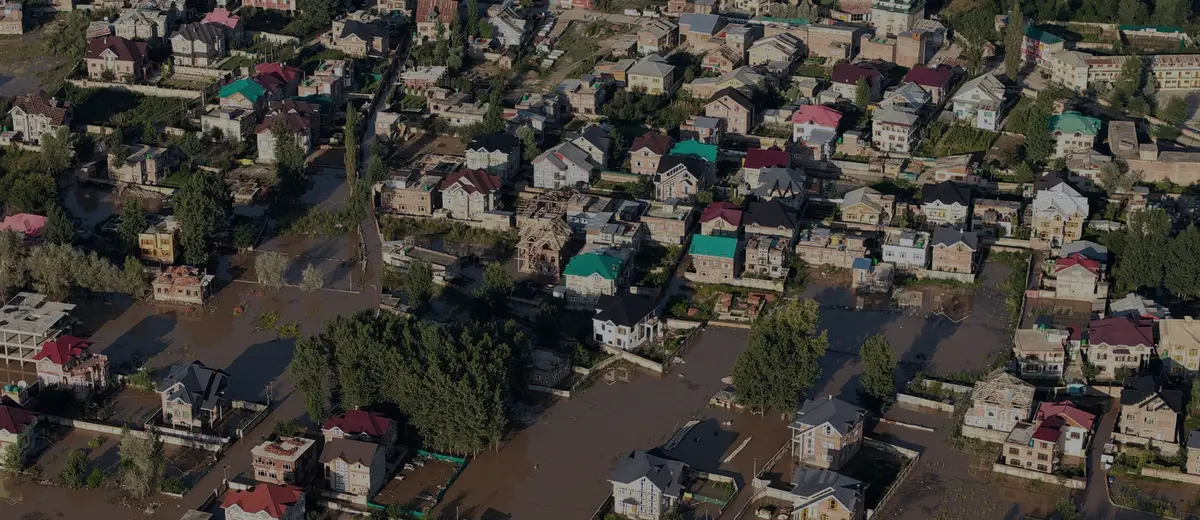
Flood Risk and Your Budget: Flood Zones, NFIP Premiums and What Buyers Should Check
Flood insurance can quietly change what a house costs you. Here is how to check a home's flood risk before you offer, when coverage is required, and what a premium does to your budget.
📑 On this page ▼
📐 Verified Sep 28, 2026 against FEMA's FloodSmart coverage guide, FEMA's Risk Rating 2.0 pages, the FEMA Flood Map Service Center and the federal flood-insurance purchase rule for lenders (12 CFR part 339). The premium in the example is illustrative; get a real quote for any home. This is general information, not insurance advice. How we check numbers →
Standard homeowners insurance doesn't cover floods. If a home is in a high-risk flood zone and has a federally backed mortgage, flood insurance is required, and it can add hundreds of dollars a month. Check the flood map and get a flood quote before you make an offer. National Flood Insurance Program policies cover up to $250,000 for the building and $100,000 for contents.
Numbers That Matter
| Figure | Amount | Source | Verified |
|---|---|---|---|
| NFIP coverage limits | Up to $250,000 for the building and $100,000 for contents | FEMA FloodSmart | Sep 28, 2026 |
| Waiting period | Generally 30 days after purchase, with a few exceptions such as a loan closing | FEMA FloodSmart | Sep 28, 2026 |
| How premiums are set | Risk Rating 2.0 prices each property's individual flood risk | FEMA | Sep 28, 2026 |
| Flood zone maps | Look up any address | FEMA Flood Map Service Center | Sep 28, 2026 |
| When lenders require it | Loans on buildings in special flood hazard areas need flood insurance | 12 CFR part 339 | Sep 28, 2026 |
What Buyers Should Check
- The flood zone: look up the address on FEMA's flood map; zones starting with A or V are high risk.
- A real flood quote: ask an agent for NFIP and private quotes before you make an offer, not after.
- Flood history: ask the seller about past flooding and claims; some states require disclosure.
- Elevation: an elevation certificate can show how high the home sits relative to expected flood levels, which affects price and risk.
- Mitigation: flood vents, raised utilities and grading can reduce damage and sometimes premiums.
Outside the High-Risk Zone
A lower-risk zone doesn't mean no risk. Flooding follows heavy rain, poor drainage and overwhelmed storm systems, not just rivers and coasts. Flood insurance is optional outside high-risk zones and often cheaper there, and the 30-day waiting period means you can't wait for a storm forecast to buy it.
Worked Example: What Flood Insurance Does to Your Budget
- Monthly cost: $2,400 a year adds $200 a month to your housing payment, usually through escrow.
- Buying power: at 6.86% on a 30-year loan, that same $200 a month would carry about $30,491 of mortgage. A flood-zone home effectively costs that much more.
- The other side: without coverage, even shallow flooding can mean tens of thousands of dollars of repairs, and disaster aid is limited and often a loan.
Premiums vary widely by property; get a quote for the specific home.
Decision Rules
If this, then that
- If the home is in an A or V zone → get flood quotes before offering and budget them into your payment.
- If the quote is high → factor it into your offer price.
- If you're outside high-risk zones but near water or in a low spot → consider a policy; it's often inexpensive.
- If a storm is coming → it's likely too late; the 30-day wait usually applies.
- If you rent → contents-only flood coverage is available.
Mistakes to avoid
- Assuming homeowners insurance covers flooding.
- Getting a flood quote only after you're under contract.
- Skipping coverage because you're outside a high-risk zone.
- Counting on disaster aid instead of insurance.
- Letting a policy lapse; renewals have a short grace period.
Related: homeowners insurance shock covers the rest of your coverage; escrow shortages explained covers how premiums reach your payment; the real cost of homeownership covers every bill; and property tax appeals covers the other big escrow item.